

POCT Testing: What Can Be Tested at the Point of Care
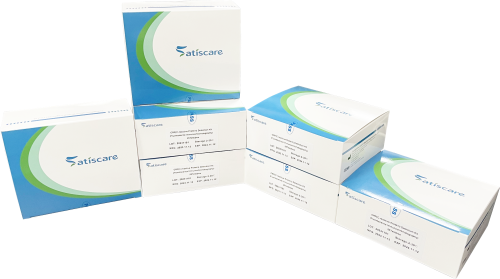
Point-of-Care Testing (POCT) delivers rapid clinical assays performed in close proximity to patients. Based on dry fluorescent immunoassay technology, it supports specimens including whole blood, serum, plasma and urine for bedside settings such as emergency departments, chest pain centers, ICUs, general practices and community clinics. Its core advantages lie in speed and proximity, enabling clinicians or patients to obtain critical diagnostic information promptly.
I. Rapid Assessment for Emergency and Critical Care
In time-critical scenarios, POCT delivers near real-time test results to guide immediate intervention.
♦ Blood gas and electrolytes: Measure blood oxygen, carbon dioxide, pH, potassium, sodium and calcium to rapidly evaluate respiratory status and internal homeostasis disorders.
♦ Cardiac markers: Notably troponin and myoglobin, assisting clinicians in early identification of myocardial infarction following chest pain onset.
♦ Coagulation function: Such as International Normalized Ratio (INR), which allows timely dose adjustment for patients on anticoagulant therapy to reduce bleeding or thrombotic risks.
II. Chronic Disease and Routine Monitoring
This represents the most widely adopted POCT application area, commonly used for rapid self-testing at home or in community settings.
♦ Blood glucose and glycated hemoglobin: Diabetic patients can test capillary blood for immediate glucose readings; certain assays also reflect average glycemic control over the prior 2–3 months.
♦ Blood lipids: Total cholesterol, triglycerides and other lipid parameters are available within minutes for preliminary risk assessment in hyperlipidemic populations.
♦ Urinalysis: Rapid screening via test strips for urinary tract infection, ketones, proteinuria and other abnormalities.
III. Preliminary Screening for Infection and Inflammation
POCT quickly detects the presence of infection or inflammation and helps differentiate potential pathogen categories.
♦ C-reactive protein and procalcitonin: Aid discrimination between bacterial and viral infections to reduce unnecessary antibiotic administration.
♦ Respiratory pathogen antigens: Rapid assays for influenza virus, SARS-CoV-2, respiratory syncytial virus and others from nasopharyngeal swabs, with results available within roughly 15 minutes.
♦ Initial infectious disease screening: Rapid antibody assays for HIV, syphilis, hepatitis B surface antigen and more, suitable for self-testing or urgent pre-operative screening.
IV. Pregnancy and Fertility-Related Testing
Human chorionic gonadotropin (hCG): The well-known early pregnancy urine assay, one of the most familiar home-use POCT tests.
♦ Luteinizing hormone (LH): Used to predict ovulation for planned conception.
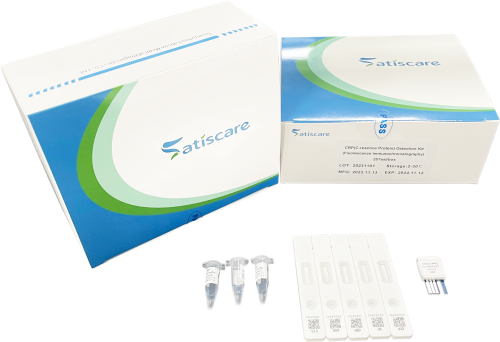
AFS-1000 Fluorescent Immunoanalyzer
This instrument is a single-channelentry-level dry fluorescent immunoassay platform. It features a compact structure and small footprint with favorable portability, suitable for low-volume testing scenarios including primary clinics, point-of-care emergency testing and mobile outreach screening. Centered on cost performance, it is ideal for medical institutions with limited budgets and sporadic low-volume testing demands. The instrument does not support parallel incubation or automatic sample addition; manual sample loading and test cartridge placement are required.
AFS2000S Multichannel Fluorescent Immunoanalyzer
The AFS2000S is a semi-automatic fluorescent immunoassay analyzer with 12 independent constant-temperature incubation channels. It targets primary medical institutions with moderate sample volumes and concurrent multi-assay testing needs, such as community health centers, general practice clinics, fever clinics and routine physical examination sites. It is configured with 12 thermally independent incubation channels with separate temperature control. Different assays can be initiated on demand without waiting for prior tests to finish, which flexibly adapts to randomly submitted samples. Its enclosed incubation chamber minimizes aerosol spread and improves intra-batch test repeatability. As a semi-automated platform, it relies on manual sample pipetting and cartridge loading and has no automatic piercing sampling or continuous track sampling structure. It resolves the queueing limitation of single-channel instruments at a moderate investment cost.
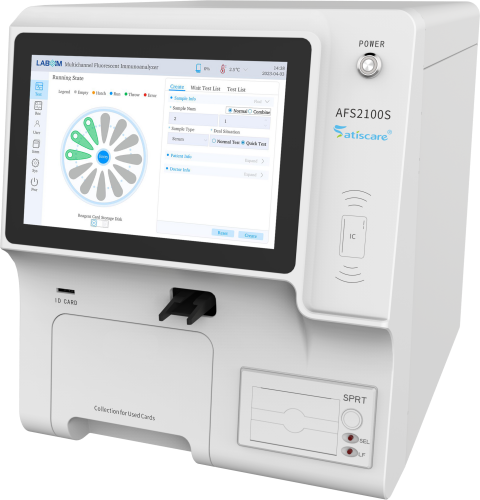
AFS2600B Immunofluorescence Analyzer
The AFS2600B is a compact track-based fully automated dry fluorescent immunoassay system. It is designed for township central hospitals, secondary hospital emergency departments and specialized clinics that demand automation with moderate daily sample throughput. Powered by the Android system and fitted with a 10.1-inch large touchscreen, it delivers a superior user experience and supports 4G transmission for seamless integration with hospital LIS and HIS systems. It incorporates reagent cartridge verification to alert operators of mismatched cartridges and mitigate human error. Among fully automated analyzers, it features a relatively small footprint with low site requirements and moderate overall investment. This fully automated system is well suited for outpatient departments and small medical facilities.
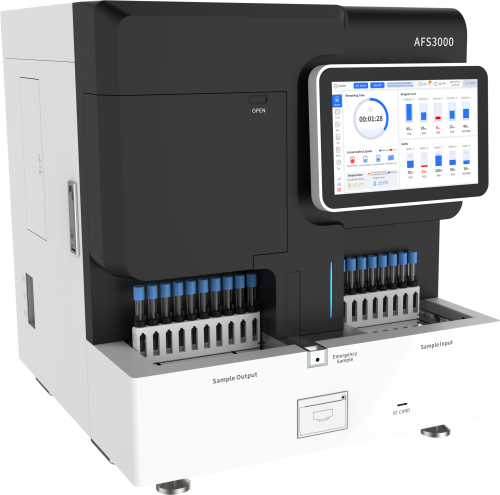
AFS3000 Automatic Fluorescence Immunoassay Analyzer
The AFS3000 is Bluelab’s flagship high-throughput track-based fully automated analyzer on the fluorescent POCT platform. It is developed for high-workload settings including county-level general hospitals, tertiary hospital outpatient departments, independent clinical laboratories and large-scale physical examination centers. It achieves a throughput of up to 120 tests per hour and supports continuous rack sampling; additional samples can be loaded online without halting ongoing runs. It is equipped with 50 sample positions, zoned incubation modules and 5 large-capacity reagent cartridge magazines, each holding up to 45 cartridges. Built-in RFID reagent management enables reagent traceability and inventory monitoring. Integrated functions include sample mixing, barcode identification, piercing sampling and liquid level sensing. It is compatible with regular blood collection tubes, swab tubes, stool sample containers and other vessel types, and supports two-step dilution assays to accommodate complex panel tests such as cardiac markers, inflammatory indicators, thyroid function and infectious disease combination panels.
The Labsim portfolio covers mainstream immunofluorescence analyzers in single-channel, multi-channel semi-automatic and fully automatic configurations, forming a graded and complete POCT testing matrix to match diverse automation requirements and varying sample workloads of medical institutions at all tiers. Standardized solutions are available for scenarios ranging from sporadic low-volume bedside emergency tests and primary care screening, to moderate-throughput parallel testing and high-volume continuous workflows in clinical laboratories and independent testing facilities.
Labsim All analyzers are built on a unified dry fluorescent immunoassay technology platform with interchangeable reagent cartridges. The full menu of POCT markers is supported, including Inflammation, Sex Hormone, Thyroid Hormone, Growth Hormone, Cardiac Marker, Kidney, Diabetes, Tumor Markers, Infectious Disease, Stomach Health, Anaemia, Nerve, Rheumatism and other analytes. The whole series adopts consistent quality control protocols and data communication standards for seamless LIS/HIS integration, facilitating centralized hospital informatization management. The platform also meets regulatory compliance and multi-language requirements for overseas export projects.