

How Tissue Cassette Printers Improve Specimen Identification in Pathology
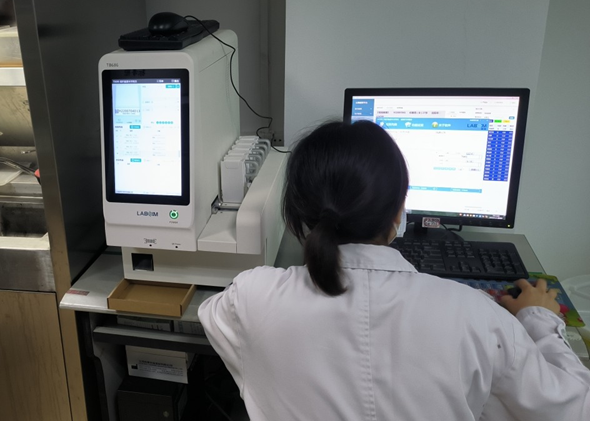
Accurate specimen identification depends on clear, consistent information at every stage of pathology processing. At the cassette level, handwritten labels, inconsistent character formats, unreadable barcodes, and markings affected by processing conditions can complicate routine identification. Tissue cassette printers help laboratories produce standardized identifiers that support visual inspection, barcode scanning, and downstream verification. Understanding how these printers contribute to identification accuracy also helps pathology laboratories evaluate their practical value and select solutions that fit their daily workflows.
Common Specimen Identification Challenges at the Cassette Level
Tissue cassettes carry identifying information that connects tissue samples with their corresponding records. Several factors can affect the reliability of this connection.
Data entry and transfer errors can introduce incorrect case numbers, specimen identifiers, or block numbers before printing begins. These errors may be reproduced across multiple cassettes when the source data is inaccurate.
Inconsistent print quality can make characters difficult to distinguish during routine handling. Poor spacing, incomplete characters, or crowded layouts may complicate manual verification, particularly when identifiers contain similar letters or numbers.
Barcode readability issues can interrupt scanning and require additional manual checks. Print quality, barcode dimensions, cassette surfaces, and scanner performance can all influence successful decoding.
Changes during tissue processing may also affect identification. Depending on the printing method, cassette material, and laboratory conditions, markings can become less legible after exposure to processing reagents or repeated handling.
These challenges occur at different points in the identification process. Reliable cassette labeling therefore depends on accurate source data, suitable printing performance, and verification under actual laboratory conditions.
How Tissue Cassette Printers Improve Specimen Identification
Producing Clear and Consistent Specimen Identifiers
Automated printing helps laboratories apply standardized characters and layouts across tissue cassettes. Each identifier can follow a consistent format, making routine visual checks easier and reducing variations associated with handwritten labels.
Printed information may include case numbers, specimen identifiers, block numbers, and other fields required by laboratory procedures. Consistent formatting helps staff distinguish these details and compare them with the accompanying records.
The accuracy of the final label still depends on the information supplied to the printer. Data validation and appropriate operating procedures remain essential parts of reliable identification.
Maintaining Readability During Tissue Processing
Tissue cassettes pass through multiple preparation stages, so identifying information needs to remain legible throughout the relevant workflow. The suitability of a printed marking depends on the printing technology, cassette material, and processing conditions.
Laboratories can assess this performance by checking printed characters before and after representative processing steps. Such testing helps determine whether identifiers remain readable under routine operating conditions.
This consideration is particularly relevant when laboratories handle high sample volumes or process different tissue types under varying protocols. Selecting a printer and compatible cassette combination that has been validated for the intended application helps maintain identification continuity.
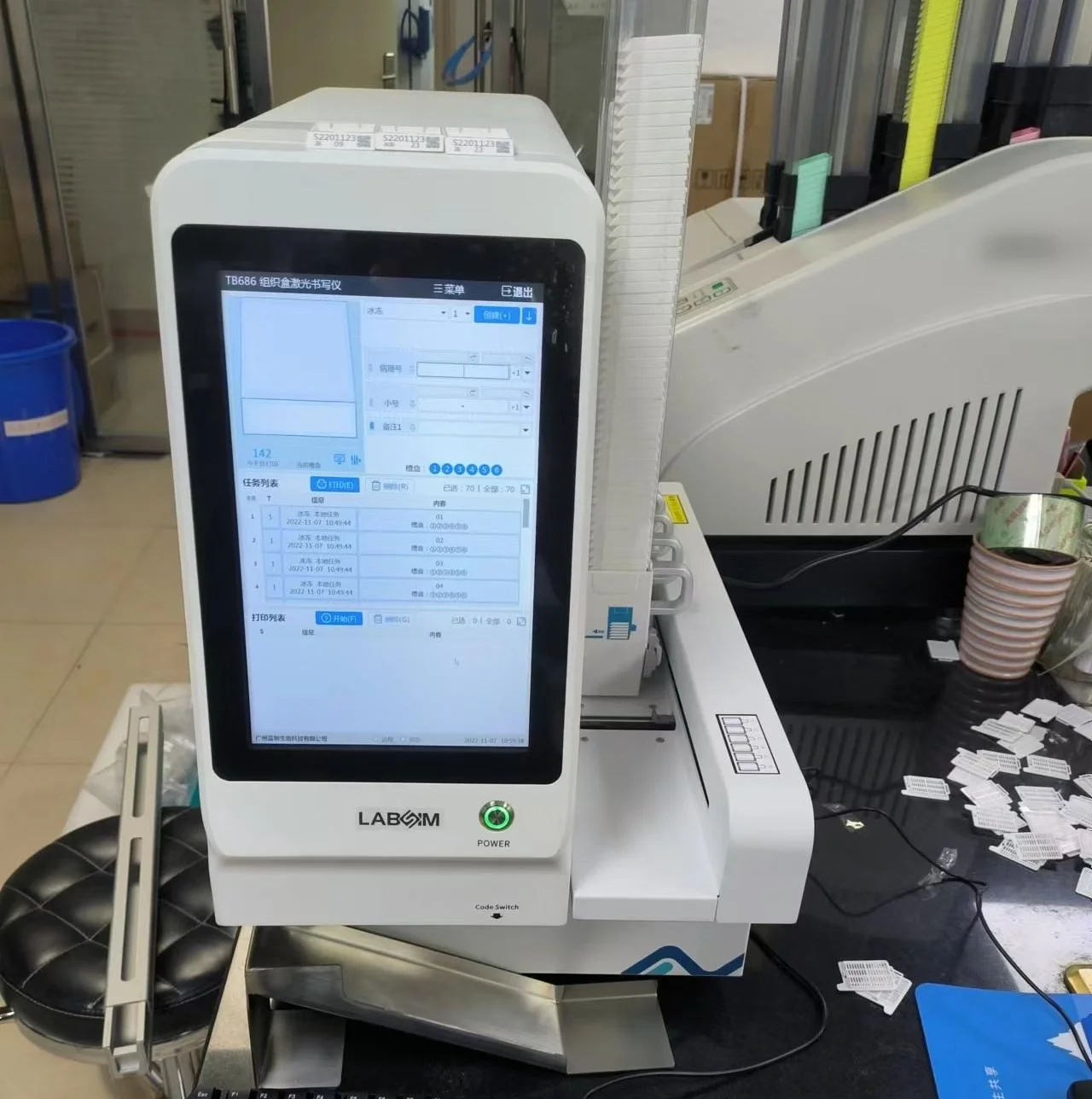
LABSIM tissue cassette printing solutions for specimen identification
Supporting Barcode-Based Identification and Verification
Barcodes allow laboratory staff to retrieve encoded identifiers through scanning, supporting faster information checks and reducing the need for repeated manual entry. Depending on the laboratory's information systems, scanned data may also support sample tracking and connections between physical specimens and digital records.
Barcode readability and data accuracy are separate requirements. A scanner may successfully decode a barcode that contains an incorrect identifier. Reliable identification therefore involves checking both the encoded information and its consistency with the printed text and source records.
When barcode printing is incorporated into established laboratory procedures, it can make routine verification more consistent and support the accurate handling of tissue specimens.
The Role of Cassette Identification in Pathology Traceability
A tissue cassette identifier provides an important reference point as a specimen progresses through pathology processing. During tissue processing and embedding, readable information helps staff associate the physical cassette with the appropriate specimen records.
When tissue blocks proceed to sectioning and slide preparation, their identifiers also support the connection between the original tissue sample and the resulting slides. This relationship is important for maintaining consistency across related laboratory records.
Cassette printing contributes to traceability by establishing a clear, machine-readable or visually readable identifier at an early stage. Continued traceability also depends on correct data entry, appropriate handling, and consistent identification procedures throughout subsequent steps.
For a broader overview of how cassette and slide printing work together, see automated slide and cassette printing in pathology workflows.
Evaluating Tissue Cassette Printer Performance for Reliable Identification
Practical testing helps laboratories determine whether a printer produces identifiers that meet their identification requirements. Four areas deserve particular attention.
Check Text Clarity and Identifier Consistency
Representative case numbers, specimen identifiers, and block numbers can be printed on the cassettes used in daily operations. The results should be checked for complete characters, clear spacing, consistent formatting, and agreement with the original data.
Test Barcode Readability Under Routine Conditions
Printed barcodes can be tested with the scanners already used in the laboratory. Verification should cover successful decoding and agreement between the scanned identifier and the corresponding printed text. Repeated testing across representative samples can help reveal inconsistent results.
Confirm Readability After Tissue Processing
Cassettes can be evaluated under processing conditions representative of the laboratory's established protocols. Post-processing checks help establish whether characters and barcodes remain readable after relevant reagent exposure and handling.
Verify Data Accuracy from Input to Printed Output
A sample of records can be traced from the original data source to the printed cassette. Case numbers, block identifiers, and barcode contents should match the intended information. Where a laboratory information system is connected, testing can also confirm that the expected fields transfer correctly to the printing process.
These checks focus on identification performance in practice. Laboratories seeking a broader comparison of printing technologies, equipment capacity, operating costs, and service requirements can consult a dedicated cassette printer selection guide for pathology laboratories.
LABSIM Tissue Cassette Printers for Reliable Specimen Identification
Pathology laboratories need cassette printing solutions that produce clear identifiers, support reliable barcode reading, and maintain legibility under routine processing conditions. LABSIM offers tissue cassette printers designed to address these needs through laser printing, barcode scanning, and automated cassette handling.
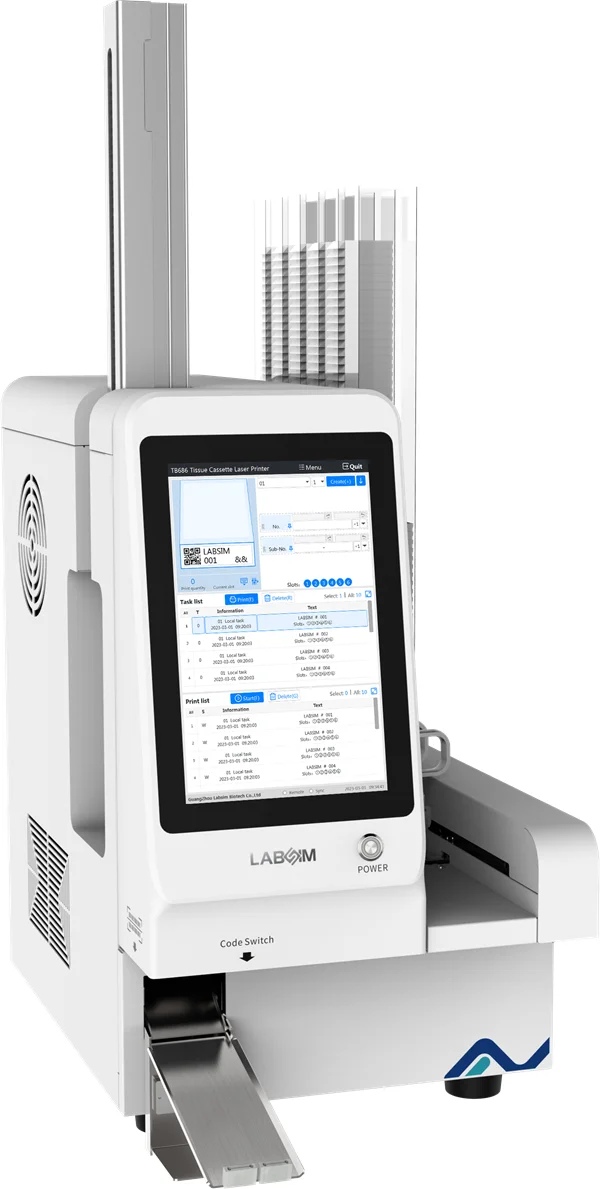
For laboratories processing multiple specimen types, the TB406U Tissue Cassette Laser Printer features six loading slots for different cassette colors, a built-in barcode scanning module, and editable print templates. These functions help laboratories organize cassette printing and verify identification data during routine operations.
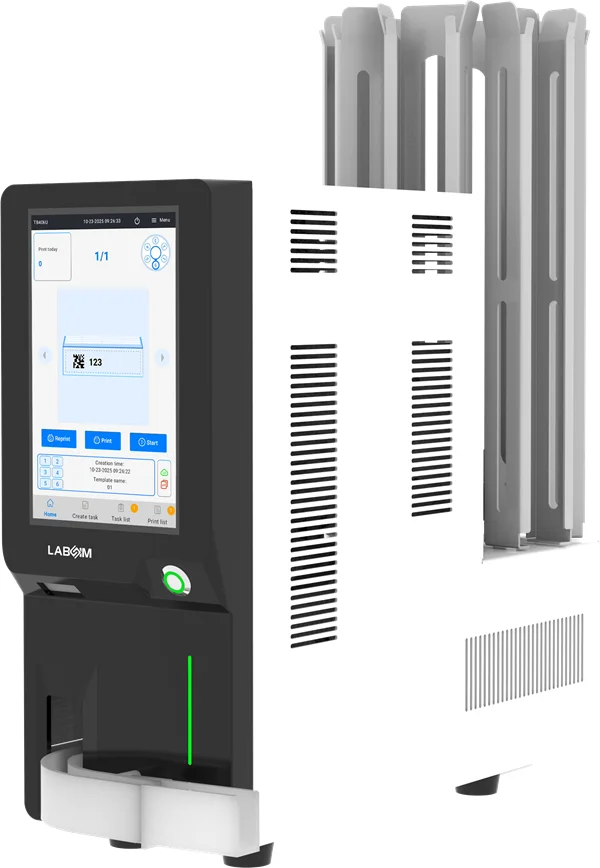
For laboratories prioritizing durable markings and long-term specimen identification, the TB686 Tissue Cassette Laser Printer uses UV laser technology to print text, symbols, and barcodes. Its printed markings are designed to resist common pathology laboratory chemicals, including xylene and alcohol, supporting readability during subsequent specimen handling.
Both models support integration with commonly used laboratory information systems, subject to the relevant configuration. Laboratories can evaluate their daily sample volume, cassette requirements, and identification procedures to determine which solution best fits their workflow. Contact LABSIM to explore tissue cassette printing solutions tailored to your pathology laboratory.
Frequently Asked Questions About Tissue Cassette Printers
1. What Is a Tissue Cassette Printer Used for?
A tissue cassette printer prints specimen identifiers, case numbers, block numbers, and other required information directly onto histology cassettes. It helps laboratories standardize labeling, improve readability, and support specimen tracking throughout pathology processing.
2. What Information Should Be Printed on a Histology Cassette?
Common fields include the case number, specimen identifier, tissue block number, and barcode. The exact information depends on laboratory protocols and identification requirements. A well-planned label layout helps staff verify specimen identity while keeping essential information legible.
3. Can Tissue Cassette Printers Print Barcodes?
Yes. Compatible models can print barcodes that encode specimen or block identifiers for machine-readable identification. Barcode type, print quality, cassette surface, and scanner compatibility all affect reading performance. Laboratories should confirm that printed barcodes can be scanned reliably using their existing equipment.
4. Do Tissue Cassette Printer Markings Withstand Xylene and Alcohol?
Resistance to laboratory chemicals depends on the printing technology, cassette material, and specific processing conditions. Some laser cassette printers produce markings designed to withstand exposure to common histology reagents, including xylene and alcohol. Laboratories should verify chemical resistance against their actual protocols and the manufacturer's specifications.
5. What Is the Difference Between a Laser Cassette Printer and a Traditional Labeling Method?
Laser cassette printers mark identification information directly onto compatible cassette surfaces, creating consistent text and barcode layouts. Traditional approaches may involve handwriting or applying separate labels, which can introduce variations in readability and handling. The suitability of each method depends on the laboratory's identification requirements, cassette materials, and workflow.
6. Can Tissue Cassette Printers Integrate With a Laboratory Information System?
Many automated cassette printers support LIS connectivity, allowing identification data to be transferred from laboratory systems to the printing process. Integration capabilities vary by model and configuration. Before implementation, laboratories should confirm field mapping, data transfer accuracy, and compatibility with their existing software.
7. How Do Tissue Cassette Printers Help Reduce Specimen Identification Errors?
Automated printing can reduce errors associated with illegible handwriting and repeated manual transcription. Barcode scanning and data verification can provide additional checks. Overall accuracy still relies on correct source data, suitable system configuration, and established laboratory identification procedures.